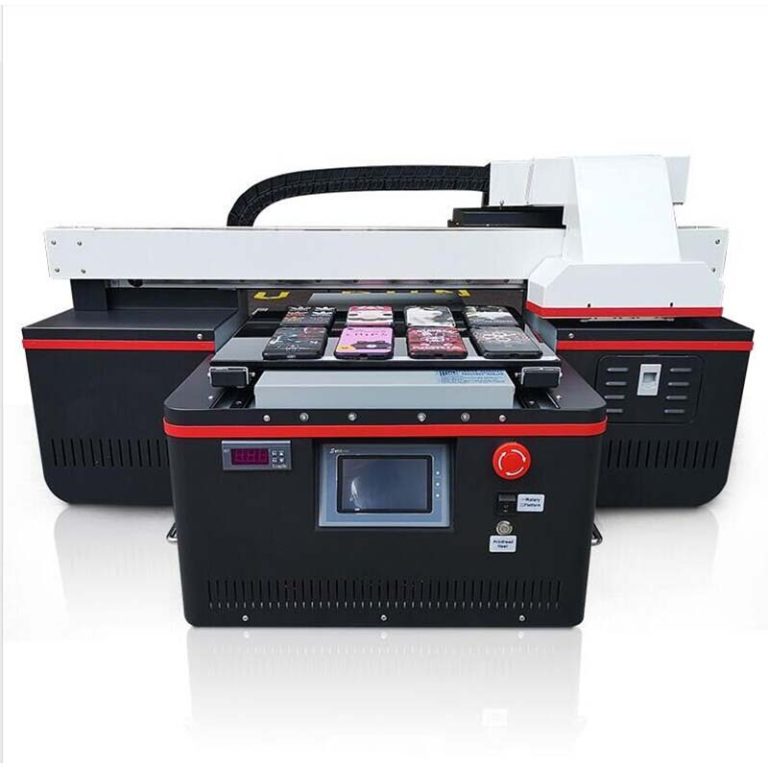
Let’s talk about a printing trick that feels like a minor act of rebellion. You know how every rule in the book says you can’t print bright white and vibrant colors directly onto a dark shirt in one go? Well, the UV DTF printer glances at that rulebook, shrugs, and proceeds to do exactly that. It’s the industry’s clever workaround, a gadget that has turned “impossible” orders into casual afternoon projects for small print shops and entrepreneurs.
So, what’s the big cheat? It all starts with a clear, sticky plastic sheet. Imagine you’re about to make a very sophisticated, full-color sticker. First, the printer lays down a dense, bright white layer onto this clear film. Think of this as the primer coat. Then, it prints the colorful design right on top of that white base. Here’s the magic word: UV—Ultraviolet Light. A small UV lamp follows the print head, instantly curing and hardening the ink the moment it hits the film. There’s no drying time. One second it’s wet, the next it’s rock-solid. This isn’t just fast; it’s the key to the whole process.
What you’re left with is a flexible, plastic decal of your design, with the ink sandwiched inside. You then peel off the excess film (a satisfying process called ‘weeding’), place the decal ink-side down on a black T-shirt, and press it with heat. The heat activates the adhesive layer that was already part of that initial print. A few seconds later, you peel off the clear plastic backing sheet. Suddenly, your design—vibrant, opaque, and detailed—is now fused to the fabric. The printer never directly “printed” on the shirt. It created a perfect, pre-made transfer. That’s the cheat code.
This cheat code is revolutionizing the custom apparel game. For small businesses, it demolishes old barriers.
No Minimum Orders: Gone are the days of having to convince 50 people to buy the same design to make it affordable. You can print one single, unique shirt and still turn a profit. It’s the ultimate print-on-demand engine.
The “Yes” Machine: A customer walks in with a complex photo print for a 50% cotton, 50% polyester team jersey? “Yes.” They want the same logo on a beanie and a tote bag? “Yes.” The versatility is staggering, making it the ultimate tool for fulfilling those oddly specific, wonderfully personal requests that define modern custom wear.
From Garage to Global: The relative simplicity and clean operation of desktop UV DTF printers have lowered the entry barrier. A creative person with a good idea, a spare corner, and an online storefront can now be a legitimate apparel brand overnight. It has democratized small-scale manufacturing.
Of course, it’s not a total fairy tale. The feel of the print, while improving, can sometimes have a slight texture. It’s also a process with several steps—printing, weeding, pressing—which requires a bit of practice to master. But for the trade-off of limitless flexibility and zero waste on unsold inventory, most are willing to learn.
In the end, the UV DTF printer doesn’t get hung up on how things “should” be done. It found a backdoor: make the perfect transfer first, then worry about the garment. In a world that demands personalization yesterday, this clever bit of rule-bending isn’t just convenient; it’s becoming essential. It turns the fantasy of “anything, on anything, anytime” into a very tangible, and wearable, reality.