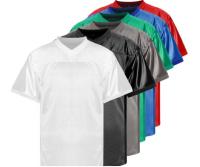
Last week, a guy walked into my shop holding a stack of plain white t-shirts. “I need fifty of these done for a company picnic next week,” he said. “Nothing fancy. Just their logo in white on white. What’s the cheapest option that still looks decent?”
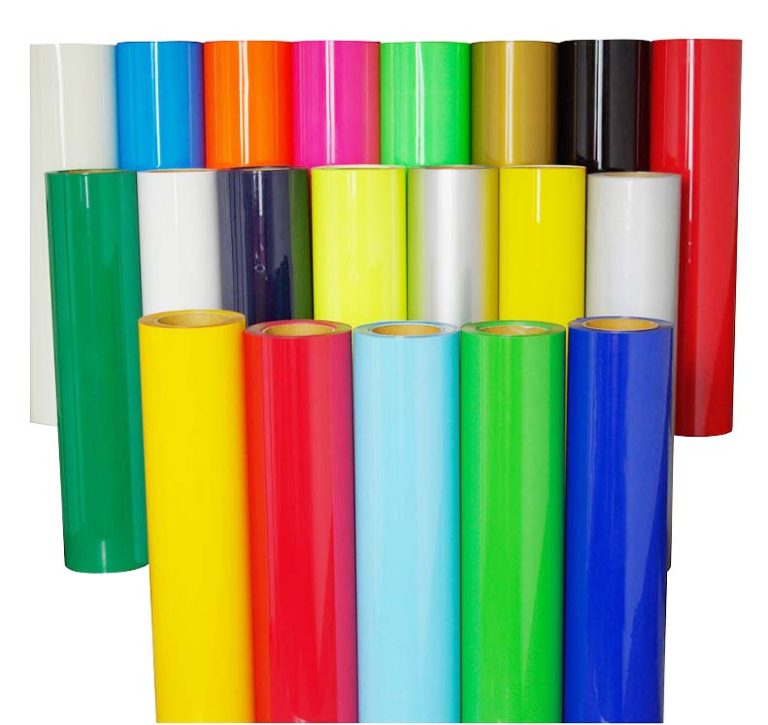
I reached for a roll of PVC vinyl and said, “This right here is your friend.”
If PU is the soft, stretchy yoga pants of the vinyl world and TPU is the high-performance athletic gear, PVC is the sturdy work boot. It’s been around forever, it gets the job done, and it doesn’t cost a fortune. Let’s talk about what it actually is and when you’d want to use it.
What Actually Is PVC Vinyl?
PVC stands for polyvinyl chloride. Say that three times fast. It’s one of the most common plastics in the world—the same stuff they use for pipes, window frames, credit cards, and those inflatable pool toys that never last the whole summer .
In the printing world, PVC heat transfer vinyl is a thin, colored film that you cut into shapes and stick onto stuff with a heat press. Most PVC vinyl has a four-layer build: a clear protective film on top, a tacky silicone layer that helps with positioning, the colored PVC layer itself, and a heat-activated adhesive on the bottom that bonds to fabric when you press it .
Typical thickness runs around 0.23mm, which is sturdy enough to handle without tearing but thin enough to press smoothly .
The Good Stuff: Why People Still Use PVC
Let’s start with the biggest reason: it’s cheap. PVC costs significantly less than PU—sometimes 30% less or more . When you’re doing big orders on a tight budget, that adds up fast.
It’s durable in its own way. PVC has excellent chemical resistance and holds up well against water, weather, and general wear . It won’t fade quickly, and the adhesion is strong when applied correctly .
It’s naturally flame-retardant. The chlorine in PVC makes it difficult to ignite and self-extinguishing once the flame source is removed . For certain safety-conscious applications, that matters.
The finish can look great. Quality PVC vinyl has a glossy, almost jewel-like shine that really pops under light . Metallic and glitter versions are widely available if you want some flash .
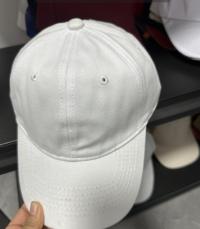
It works on lots of surfaces. Cotton, polyester, blends—PVC sticks to most common fabrics just fine . It’s also great for harder surfaces like hats, bags, and even some plastics .
It cuts and weeds nicely. The material is designed to cut cleanly without dragging or tearing, and excess vinyl peels away smoothly . Even beginners can get good results.
The Not-So-Good Stuff: Where PVC Falls Short
Here’s the honest truth. PVC’s biggest weakness is flexibility—or rather, the lack of it. It’s stiff. It doesn’t stretch. Put it on a t-shirt that gets pulled and yanked, and eventually it will crack . That’s just the nature of the material.
It doesn’t feel great. Compared to PU, which feels soft and almost like part of the fabric, PVC feels like… well, plastic. You can feel it sitting on top of the shirt . For some projects that’s fine. For premium apparel, it’s not.
Heat can be an issue. PVC starts to degrade above certain temperatures. The recommended continuous use temperature is around 60-70°C, which is fine for normal wear but something to keep in mind .
There are environmental concerns. PVC contains chlorine, and its production and disposal raise questions that PU doesn’t have . Some regions have stricter regulations on PVC products, so if you’re shipping internationally, check local rules first .
Laser cutters hate it. If you’re using a laser cutter for your designs, do not use PVC. The chlorine releases toxic gas when lasered and can damage the machine’s lens . Stick to plotter cutters with PVC.
Quality can vary. I’ve had customers bring me PVC vinyl that was fine, and PVC vinyl that wouldn’t stick worth a damn. Some of the cheaper stuff on the market just doesn’t perform . Read reviews, buy from reputable sources.
Where PVC Actually Makes Sense
So who should use PVC? Let me give you some real-world examples.
Event t-shirts. Company picnic, charity run, one-day festival—where people will wear the shirt once or twice and the budget is tight. PVC keeps costs down and looks fine for the occasion .
Promotional products. Those free shirts companies hand out at trade shows? Often PVC. They need to look decent but cost pennies .
Hard surfaces. PVC is actually great for items that don’t need to stretch—hats, bags, plastic items, signs . It bonds well and stays put.
Numbers and letters for non-stretchy uniforms. Think baseball jerseys, umpire shirts, anything that doesn’t get yanked around too much. PVC holds up fine .
Large lettering and bold designs. Because PVC is thicker and less flexible, it actually works better for big, simple designs where you want the graphic to stand out .
The Bottom Line
PVC heat transfer vinyl is the budget-friendly workhorse of the custom printing world. It’s not fancy. It doesn’t feel luxurious. It won’t stretch with your favorite yoga pants. But for the right jobs—simple designs, tight budgets, items that don’t need to flex—it gets the job done and looks good doing it.
Think of it this way: if you’re printing fifty shirts for a one-day event, PVC is smart money. If you’re printing jerseys for a basketball team that plays twice a week all season, spend the extra on PU or TPU. Your customers will thank you when their gear lasts.
Next time someone walks in needing a stack of cheap shirts with simple logos, you’ll know exactly what to reach for. And when they come back happy because the price was right and the prints looked good? That’s PVC doing its job.