Walk into any print shop these days and you’ll hear the same debate. UV flatbed or UV DTF? Which one do I need? It’s like walking into a hardware store and staring at the tool aisle. Do you buy the circular saw or the jigsaw? Both cut wood. Both are useful. But they do completely different things.
Let me save you the headache. Here’s what each machine actually does, who uses them, and why you might need one—or both.
The UV Flatbed: Built for Flat Stuff That Stays Flat
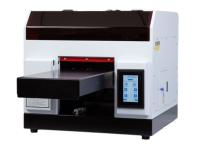
A UV flatbed printer prints directly onto things. You take a piece of acrylic, a sheet of wood, a metal panel, a glass tile—you put it on the printer bed, and the machine prints right onto the surface. UV light hits the ink instantly, drying it the second it lands. No drying racks. No waiting. Just print and go.
This machine loves flat, rigid materials. It’s the king of the sign shop. Companies that make acrylic displays for stores? They use flatbeds. Shops that print metal nameplates for factories? Flatbed. People making custom awards and trophies? Flatbed all day.
Some flatbeds can even print raised textures by building up layers of white ink. You can make braille signs, textured business cards, or dimensional art pieces that feel as interesting as they look.
But here’s the limit: flatbeds only like flat things. Curves confuse them. Round objects make them angry. If your business is all about flat surfaces, this is your machine.
Who Actually Uses UV Flatbeds:
Sign shops printing acrylic displays and metal signs
Industrial companies labeling control panels and equipment
Decor brands making custom wood art and glass pieces
Trade show builders creating dimensional booth graphics
Anyone doing volume work on flat, rigid materials
The UV DTF Printer: The One That Prints on Everything Else
Now meet UV DTF. This one works completely differently. Instead of printing on your item, you print onto a special sticky film first. Then you peel that design off and stick it onto whatever you want.
Smooth surfaces? Works great. Rough textures? No problem. Curved bottles? Easy. Round objects? Bring them on. That weird-shaped promotional item a client brought back from a conference? UV DTF says yes.
This is the machine for people who get asked to print on strange stuff. And in this business, you will always get asked to print on strange stuff. Water bottles. Golf balls. Phone cases. Tumblers. Hats. Leather journals. Metal pens. Wooden spoons. If it exists, someone will want their logo on it.
The other magic trick? Zero risk. If you mess up the print on film, you toss it and print another. You haven’t ruined an expensive product. No waste, no tears, no angry customers.
Who Actually Uses UV DTF Printers:
Gift shops offering on-the-spot personalization
Small businesses doing custom drinkware and accessories
Promotional companies handling weird client requests
Etsy sellers making custom items in small batches
Anyone who wants to say yes to everything
The Smart Setup: Why Some Shops Run Both
Here’s what the smart money does. They don’t choose. They buy both.
The UV flatbed handles the steady work. Fifty acrylic signs for a corporate client? Flatbed. Metal plates for a construction project? Flatbed. This is the reliable work that pays the rent.
The UV DTF handles the chaos. The one-off custom order from a walk-in customer. The weird-shaped promotional item. The rush job that needs to ship today. The lady who wants her dead cat’s face on a water bottle. (Yes, that happens. More than you’d think.)
Together, they cover everything. Flat stuff and weird stuff. Volume and variety. Predictable and chaotic.
Which One Do You Actually Need?
Ask yourself one question: what are you printing on?
If the answer is mostly flat things—acrylic, wood, metal, glass, tile—and you’re doing decent volume, get a UV flatbed. It’s fast, direct, and built for that job.
If the answer is “everything else”—curved things, textured things, random things people bring you—get UV DTF. The flexibility will make you money.
If the answer is both? Save up and get both. You won’t regret it.