Last week, a customer walked into my shop holding a wrinkled t-shirt and a photo of their dog. “I want this face on this shirt,” they said. “My cousin tried to explain the difference between heat transfer and sublimation, and now my brain hurts.” I laughed, because honestly? Most people in this industry can’t explain it without sounding like a chemistry textbook.
Here’s the simple truth: both methods use heat to stick designs onto stuff. But they work completely differently, and understanding that difference will save you from wasting money on projects that were doomed from the start.
Sublimation: The Magic That Sinks In
Sublimation sounds fancy, but the concept is actually pretty cool. The word means turning a solid directly into a gas—skipping the liquid phase entirely . Think of dry ice “smoke” at Halloween. That’s sublimation happening.
In printing, here’s how it works: you print your design onto special paper using sublimation ink . Then you press that paper onto fabric with heat and pressure. When the ink heats up, it turns into a gas and bonds directly with polyester fibers at a molecular level . The ink becomes part of the fabric, not something sitting on top.
The result? You can’t feel the design when you run your hand over it. It won’t crack, peel, or fade no matter how many times you wash it . Professional sports jerseys use sublimation because players sweat, stretch, and wash those things constantly.
But sublimation has limits. Big ones. It only works on polyester fabrics—at least 65% polyester to get decent results . And because the ink is semi-transparent, it barely shows up on dark shirts . Want a bright design on a black shirt? Sublimation will give you a ghost that nobody can see. You really need white or light-colored fabrics for the colors to pop .
Heat Transfer Vinyl: The Sticker That Sticks Forever
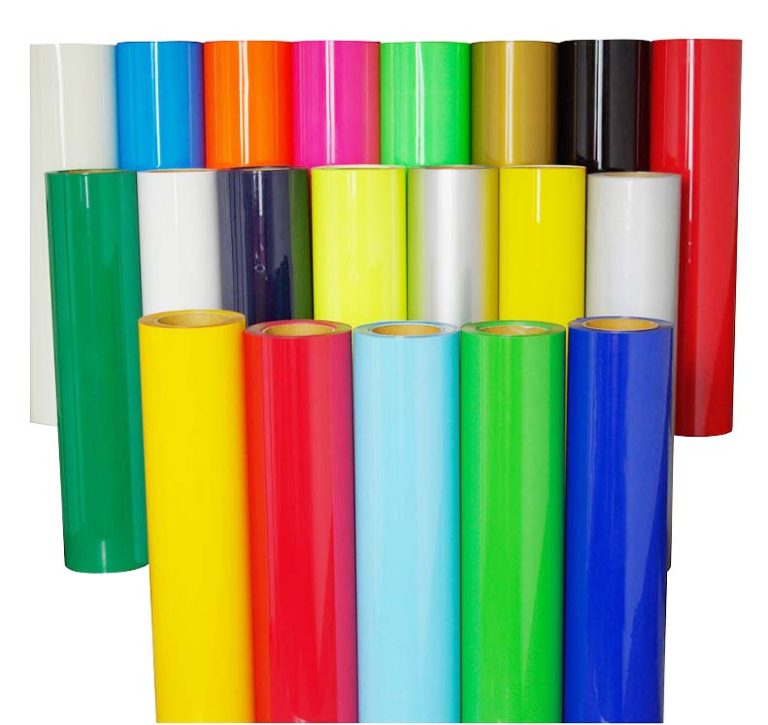
Heat transfer vinyl (HTV) is what most people picture when they think custom shirts. It’s basically a thin plastic film with heat-activated glue on the back . You cut your design out of a colored sheet, peel away the extra bits that’s called weeding, and press it onto fabric with heat .
Unlike sublimation, HTV sits on top of the fabric. You can feel it. It has texture . Some people love that raised, vinyl look. Others prefer the smooth feel of sublimation. Neither is wrong—it’s just different.
The big advantage? HTV works on anything. Cotton, polyester, blends, even leather and nylon . Dark shirts? No problem. The vinyl is opaque, so colors stay bold and bright no matter what’s underneath . You can get glitter vinyl, metallic, glow-in-the-dark, puff vinyl that raises up when heated—tons of options .
The downside is durability. Because it sits on top, HTV can crack and peel over time, especially with heavy washing . It also has more “hand”—industry speak for how much you can feel it on the fabric. Big designs can feel stiff or heavy .
The Side-by-Side Nobody Asked For
Let me break this down in plain language.
Sublimation is for when you want the design to disappear into the fabric. It’s permanent, soft, and photo-quality. But it only plays nice with polyester and light colors. If you’re making sports uniforms, flags, or all-over print stuff, sublimation is your friend .
Heat transfer vinyl is for everything else. Cotton t-shirts, work uniforms, bags, hats, dark fabrics, weird materials. It’s versatile and gives you that classic printed-on look. But it won’t last forever, and big designs can feel heavy .
Some shops use both. Sublimation for performance wear and bulk orders where durability matters most. HTV for one-off custom jobs, cotton stuff, and designs where you want that vinyl texture .
Which One Should You Pick?
Ask yourself two questions.
First, what fabric are you printing on? If it’s mostly cotton or dark colors, HTV is your only real option unless you want to mess with special coatings .
Second, how much do you care about feel? If you want butter-soft designs you can’t feel, and you’re working with polyester, go sublimation. If you want that classic printed-on look with texture you can touch, HTV wins.
And if you’re still confused? Come talk to someone who does this every day. We don’t bite. Well, most of us don’t.
The important thing is knowing the difference before you drop money on supplies that won’t work for your project. Now go forth and print stuff. Your cousin will be impressed you finally understand it.