Last week, my friend Mike sent me a photo of a round rock and asked, “Can you put my logo on this?” I looked at my UV flatbed printer. I looked at the rock. I sighed. Mike, why do you do this?
If you’re new to printing, you’ve probably heard “UV flatbed” and “UV DTF” thrown around like they’re the same thing. They’re not. Let me explain the difference before Mike sends me another weird object.
UV Flatbed—The Direct Approach
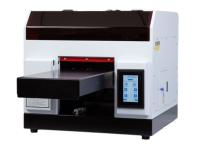
A UV flatbed printer prints directly onto stuff. You put a flat piece of wood, acrylic, or metal on the bed, and the machine prints right onto it. The “UV” part means ultraviolet light hits the ink instantly, drying and hardening it immediately. No waiting, no smudging.
These machines are workhorses for the sign industry. Need fifty acrylic displays? This is your tool. They’re fast, precise, and can even build up ink layers for textured effects.
But here’s the catch: they hate curves. Uneven surfaces? Round objects? Anything that doesn’t sit perfectly flat? Forget it. That rock Mike sent? A flatbed would just give up.
UV DTF—The Clever Middleman
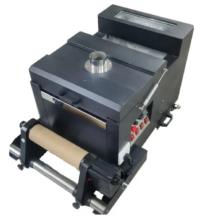
UV DTF stands for Direct-to-Film, and it works completely differently. Instead of printing on your item, you print onto a special sticky film first. Then you peel that design off and stick it onto pretty much anything.
Smooth, rough, flat, curved, round, bumpy—UV DTF doesn’t care. That rock? Prints on it, wraps around it, looks amazing. Water bottles, golf balls, textured phone cases, weird promotional items from trade shows—you just say yes.
The other genius part? Zero risk. Mess up the print on film? Throw it away and print another. You haven’t ruined an expensive product. With a flatbed, a mistake means that $50 acrylic sign is now trash.
Which One Should You Pick?
Here’s the simple truth: a UV flatbed is like a chef who makes perfect steak but only cooks steak. UV DTF is the friend who can cook anything with whatever’s in your fridge.
Pick a UV flatbed if your business is mostly flat things—acrylic signs, metal plates, wood panels—and you’re doing medium to large volumes. It’s fast and built for that job.
Pick UV DTF if you want to say yes to everything. Custom water bottles for a 5K race? Yes. Personalized golf balls for a tournament? Yes. Random objects customers bring you? Yes.
Some smart shops buy both. Flatbed for the bread-and-butter flat jobs, UV DTF for all the weird, fun requests that make customers remember you forever.
In conclusion
Neither is better. They’re just different tools. It’s like asking whether a hammer beats a screwdriver. Depends entirely on what you’re building.
So next time Mike sends you a photo of a strange object, you’ll know exactly which machine to reach for.
And if you’re still confused? Come talk to us. Just maybe leave the rocks at home.